
At an aggregate level, the late ace investor's portfolio that was valued at Rs 32,445 crore as on March 31, 2023 is now worth Rs 35,979 crore.

With RIL supplying about 47 per cent of the domestic petcoke production, current dynamics are bound to change.

India's jugalbandhi with coal and clean energy is coming unstuck, neither achieving adequate renewable generation nor ensuring sufficient coal-fired power in the quest to become a $5-trillion economy. Six months have elapsed since Prime Minister Narendra Modi announced an ambitious climate agenda for India at COP26 at Glasgow. The net zero emissions target by 2070 is a distant one, but there are nearer-term plans to meet 50 per cent of energy demand with renewables by 2030 by increasing capacity to 450 Gw. A cursory look at the balance sheet of India's climate progress since November reveals ponderous progress towards meeting the renewables target even as the country is scrambling to expand coal-fired generation in the face of a power crisis.

Less-than-expected rainfall and a poor spatial distribution, experts say, can rekindle fears of a rise in food and fuel inflation that can have an impact on the RBI's monetary policy. The fear of less than optimal rainfall due to El Nino this year, analysts believe, is the biggest short-term risk for the markets, which they said has not been fully priced in yet by them. Monsoon set over Kerala on June 08, a week later than its scheduled date.

The industry's operating margins will narrow by 0.30- 0.80 per cent largely on an increase in local hires which the industry has been forced into due to the policy framework in its markets.

Among the lot, Rallis India, Escorts, Jubilant Life Sciences, and Crisil added half of the total gains made in the ace stock-picker's portfolio.

Debit card payments remained sluggish due to the surge in digital transactions after the pandemic, and the Unified Payments Interface (UPI) has emerged as the most popular mode of money transfer, particularly for small value transactions, according to RBI data. In July 2020, the total debit card spends stood at Rs 2.81 trillion, as compared to Rs 3.15 trillion in July 2023, reflecting a growth of 11.96 per cent. UPI spends have seen a whopping growth of 428 per cent, zooming from Rs 2.90 trillion to Rs 15.33 trillion during the same period, the data revealed.
Vedanta group chairman, Anil Agarwal, 69, is well known for his business journey from a scrap dealer from Bihar to a London-based globe-girdling metal and oil and gas conglomerate with revenues of $19 billion. Now his abilities to keep his group from over-leveraging itself will be put to the test. Over the years, Agarwal, now based in London, set up the conglomerate via acquiring iron ore producer Sesa Goa, Cairn's oil producing assets in India, and Electrosteel Steel.
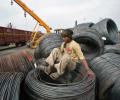
On an average most commodities are up between 20-30 per cent compared to a year ago levels.

Nearly a decade ago, the first fully electric vehicle (EV) caught fire on the road in the US. It was a model from Tesla, the world's most admired EV maker. A metal fragment punctured the underbelly of the vehicle, penetrating its battery pack, leading to a fire. Indian lawmakers and automakers have had nine years to study the incident (in fact, three Tesla Model Ss caught fire in two months in 2013) but seem to have learnt little.
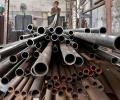
On June 30, mining and metals giant Vedanta, announced that it had decided to initiate a strategic review of its steel and steel-making raw material businesses. The review would begin immediately and evaluate a broad range of options, including but not limited to a potential strategic sale of some or all of the steel businesses, the company said in its stock exchange filing. The signs have been there - approaches had been made to steel players over the past year. Last December, Anil Agarwal, chairman Vedanta group, told Business Standard that the steel plant capacity was about 3 million tonnes (mt).

'Interim Budget has ignited the entrepreneurial spirit.'

The ongoing Hamas-Israel conflict has disrupted India's efforts to gain from a recent fall in crude oil prices. Since Hamas' invasion of southern Israel on October 7, petroleum has become costlier by around $5 per barrel, threatening to stoke prices and impact growth. Brent crude was trading at $89.8 per barrel on October 9 (9.15 pm IST), up over 4 per cent, thwarting India's anticipation of a period of declining oil prices - after the leading global petroleum benchmark declined by around 11 per cent last week.

Led by Trent, which hit its lifetime-high recently, apparel retailers have gained between 10 per cent and 36 per cent over the past three weeks. Given the network of physical stores, these stocks shall be major beneficiaries of the unlock theme, with most states doing away with Covid restrictions. Amid improving footfall, analysts expect the sector to post double-digit growth in FY23.

The development of private data sources is a hugely positive development. It should serve as a challenge to the government to improve its own record on producing timely and reliable statistics, points out T N Ninan.

The return of private investment now struggles with lack of funds and election-driven uncertainty.
.jpg)
Bank has cited trend of global easing and weak growth
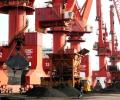
Huge demand for dry bulk commodities such as iron ore, coal, and grain has helped the Index touch a five year high recently.
With little clarity on the demand outlook, investors should wait out the next couple of quarters rather than rush in to catch a falling knife, says Ram Prasad Sahu.

According to latest data, crops have been sown in around 72.13 million hectares, which is 8.90 per cent less than the same period last year.

The duty hike on cigarettes by 16 per cent announced in the Union Budget 2023-24 would have a nominal impact of around 7-12 paise per stick across cigarette categories, according to experts. This upward revision in National Calamity Contingent Duty (NCCD) would have negligible impact on smokers and the companies could easily absorb the shock as it may not also have any resultant impact on margins, they said. Finance Minister Nirmala Sitharama in the Union Budget for 2023-24 on Wednesday proposed to revise and increase the duty on cigarettes to about 16 per cent.

Russia's war on Ukraine has sent steel prices soaring to its highest levels in the domestic market since November 2021. But there is little cheer in the industry. That's because input costs are spiralling out of control, leaving the big boys nearly as high and dry as the small, medium and secondary steel producers. Russia and Ukraine are major providers of steel and raw materials to the world.
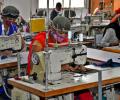
'The approach today is, instead of giving loans to 100 MSMEs, let us give one loan to a big-ticket corporate.' 'And so many of these big fish deceived the banks and the banks are in the doldrums now with high NPAs.'

LIC identifies the problems well, but what the markets will watch is how nimble it is with the solutions.

Companies are not able to pass on the pressure from rising input costs to buyers, and this is likely to result in a compression in corporate profit margins for the March quarter, a report said on Monday. Operating profit margins for companies are set to fall by as much as 3 percentage points compared to the year-ago period, and up to 0.60 per cent as compared to the preceding December quarter, the research wing of rating agency Crisil said in a report. The report comes ahead of the earnings season when major companies start reporting their profits.

The roads in India is a powerful stimulant to rural employment. It will have a strong multiplier effect on the local economy, says Subir Gokarn.

Significant portion of the funds used to fuel urban demand have become illegal and inoperative.

Nirma's tryst with the pharmaceutical space started in 2006 when it acquired the ailing Core Healthcare in a deal reported to be worth Rs 300 crore. The Ahmedabad-based manufacturer of intravenous fluids was subsequently renamed Nirlife. Pharma industry insiders say Nirma, which broke open the detergent market in the 1990s with low prices and massive advertising, tried an encore of the low-price strategy in pharma, but with mixed results.
.jpg)
Q1 results indicate more pain ahead, as slowdown has spread to more sectors, pricing power has come down and rising interest cost is eating into profits.
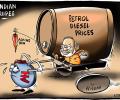
What could be more uncertain than Virat Kohli's agonising wait for a century for over two years? Perhaps it's what you will pay tomorrow morning to fill your vehicle's tank. Pump prices have joined cricket scores as the country's favourite discussion topic. Steep increases invite widespread protests, while moderate additions make the government anti-reformist. The ongoing fuel price conundrum is no different.

India has a history of jugaad, and retrofitting vehicles is one such manifestation of the legendary Indian skill. Not so long ago autorickshaws and small Marutis used to strap on subsidised LPG cylinders and power themselves to a cheap ride. There were the odd explosions, lives were lost, but the jugaad continued. Then compressed natural gas (CNG) was introduced in Delhi following a court order. Initially, customised CNG kits were fitted to conventional (internal combustion engine or ICE) autos cheaply, enabling commuting at less than half of what you would cough up for diesel. The industry is better organised now with Suzuki and Hyundai designing CNG-fired vehicles, and Mahindra and TVS manufacturing liquefied petroleum gas (LPG)-powered three wheelers.

In the past month, wheat prices have increased 6.3% as production is expected to be 1.5% lower, in terms of crop acreage, than the earlier estimate

According to research by IHS Markit, for an ecosystem still grappling with infrastructure issues -- the high cost of EVs and a greater OEM (original equipment manufacturer) focus on electrifying two-wheelers and commercial vehicles first -- the share of such vehicles is expected to be 4 per cent by 2030, reports Pavan Lall.

How do you pick a mutual fund scheme that suits your needs?

The earnings are, however, expected to be down around 2 per cent on a sequential basis due to pent-up demand getting exhausted and the adverse impact of rising metals and energy prices on consumer goods and manufacturing companies.

Our focus around technology, cost efficiency, persistency and effective distribution channel will continue, says the ICICI Bank MD and CEO.

Oil and gas sectot may not put up good numbers in Q4.

Top laggards in the Sensex pack included HDFC, ICICI Bank, TCS, HCL Tech, Kotak Bank, Asian Paints, TechM and HUL, dropping up to 2.67 per cent.

The proposal to levy a 'super-rich' tax, at the rate of 35 per cent, on those earning more than Rs 10 crore a year might not receive support of the Union Cabinet.

Investors are keenly awaiting the announcement of the macroeconomic data-IIP and CPI due on Tuesday.
